Pain in the feet or calves during walking can have several possible causes. One important pattern is pain that appears during activity and improves with rest.
This type of pain may be associated with peripheral artery disease, a condition involving reduced blood flow. Poor circulation can cause discomfort when the muscles need more oxygen during movement.
Arthritis may also cause foot pain while walking. Tendon problems can lead to pain, stiffness, swelling, or difficulty moving comfortably.
Nerve disorders may also contribute to walking pain. Because the cause may involve joints, tendons, nerves, or circulation, proper evaluation can help guide treatment.Health
Tips for Maintaining Healthy Feet
Healthy daily habits can help protect the feet and reduce the risk of problems. Wearing properly fitting shoes is important because tight or poorly supportive footwear can cause pressure, blisters, pain, and irritation.
Regular physical activity can support circulation and overall health. Movement helps the body maintain strength, balance, and blood flow.
People with diabetes should manage blood sugar carefully and inspect their feet regularly. Daily checks can help identify cuts, blisters, sores, swelling, or color changes early.
A balanced diet rich in vitamins and minerals may support nerve and muscle health. Staying hydrated may also help reduce cramps linked to dehydration.
Avoiding smoking is another important step because smoking can affect circulation. Keeping the feet clean and moisturized may help protect the skin, especially when dryness or cracking is present.
When to Seek Medical Care
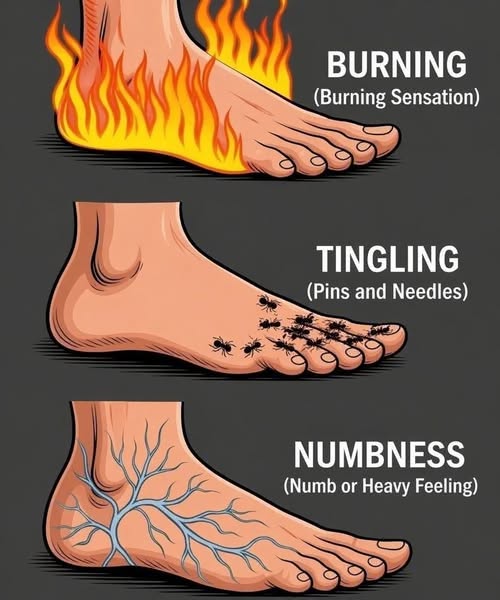
Medical care is important when foot symptoms are persistent, worsening, sudden, or severe. Burning, tingling, or numbness that does not go away should be discussed with a healthcare professional.Health Conditions
Foot ulcers or wounds that will not heal should also be evaluated. This is especially important for people with diabetes or circulation concerns.
Severe swelling in one leg requires prompt medical attention. Sudden loss of sensation should also be treated as a serious symptom.
Foot pain with fever, redness, warmth, or swelling may suggest infection or inflammation. Changes in skin color accompanied by pain or coldness should also be checked quickly.
Symptoms do not automatically mean a person has a serious disease. Still, persistent or worsening problems should be evaluated so the underlying cause can be identified and treated appropriately.
Final Thoughts
Burning, tingling, and numbness in the feet can be symptoms of peripheral neuropathy, a condition caused by damage to the peripheral nerves. Diabetes is one of the most common causes, but it is not the only possible explanation.Pain Management
Vitamin deficiencies, alcohol misuse, certain medications, infections, thyroid disease, and nerve compression can also contribute to these symptoms. Circulation problems may also affect the feet and cause pain, coldness, swelling, or color changes.
The feet are easy to overlook, but changes in how they feel or appear can sometimes reflect broader health concerns. Paying attention to symptoms, checking the feet regularly, and seeking medical care when warning signs appear can help protect both foot health and overall well-being.
Not every burning, tingling, numb, swollen, or painful foot symptom is dangerous. However, when symptoms persist, worsen, or begin to affect daily activities, professional evaluation is the safest way to understand what is happening and receive proper care.